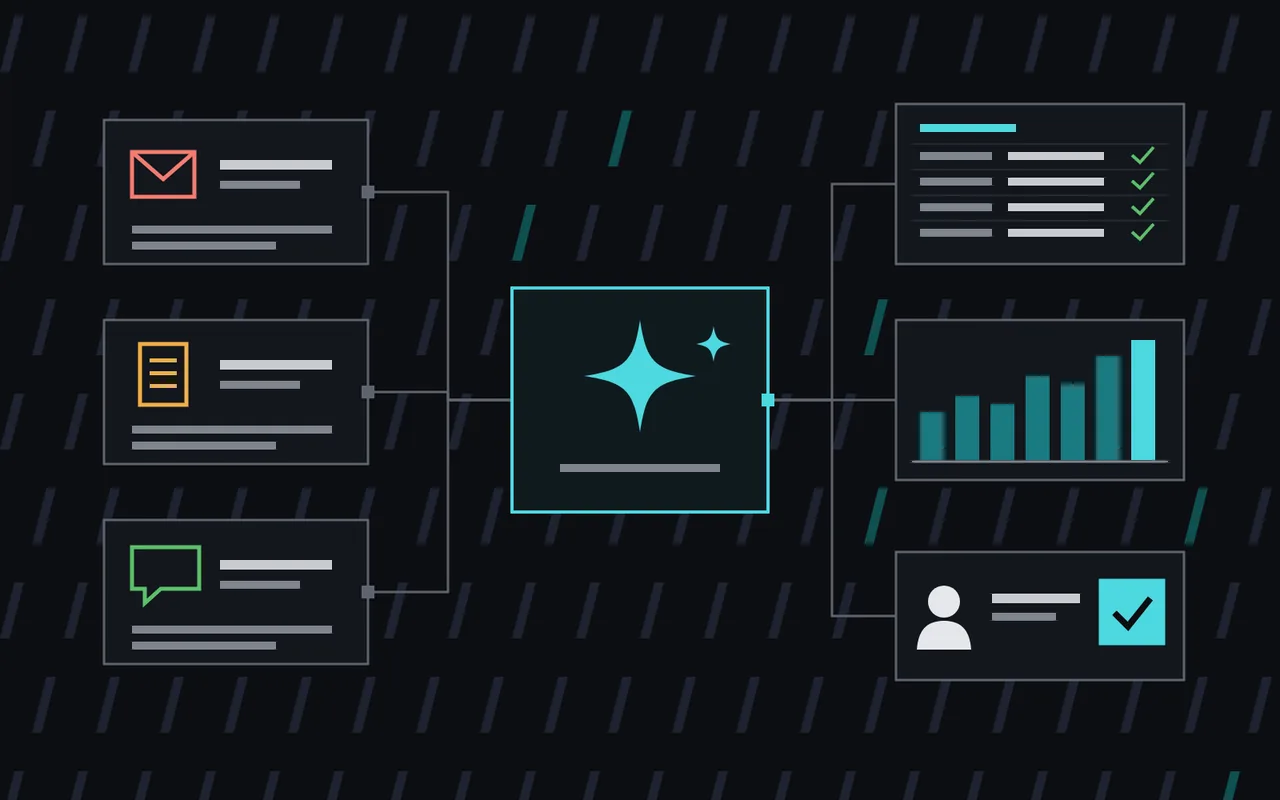
AI for business is often sold as a magic button. In practice it works best where there is a lot of repetitive work with text and data, clear rules, and a person who checks the result. Here is where we see real value today, and how to start without big risks.
Where AI already pays off
- Inbound requests and email. AI reads an email or a form, works out the topic and urgency, pulls out contacts and amounts, and creates a card in your CRM. Your manager sees a request that is already sorted, not raw text.
- Documents. Invoices, delivery notes, service acts: AI moves details, amounts and dates into your accounting system and flags anything that doesn't match the order. A person confirms instead of retyping.
- Customer support. A first line answers typical questions from your knowledge base around the clock and hands complex cases to a person with a short summary of the conversation.
- Sales. Follow-ups to clients who went quiet, lead qualification, a call summary in the CRM. We have worked on a platform of AI sales agents, and the biggest time saver was the routine after the conversation, not the conversation itself.
- Reports. A weekly report on sales, stock or support builds itself and arrives in Telegram or by email, with a plain explanation of what changed.
- Content and translation. This site was translated into 13 languages by an AI session that follows written rules and a glossary; a person proofreads instead of translating from scratch.
Where AI should not work without a person yet
Decisions with legal or financial consequences, payments and refunds, replies to complaints — anything where a mistake costs more than the time saved. There AI prepares a draft, and a person decides.
How to start
- Pick one process that takes many hours and has a clear result: "request in the CRM", "invoice in accounting".
- Measure how it works now: time per operation and how many mistakes.
- Run AI with a person checking every step. Once quality is stable, switch to spot checks.
- Compare with your baseline after a month. If there is no gain, stop — that is a result too.
Data and security
Customer personal data should not end up where it can be used to train models. Use business API access with a data processing agreement, keep the data in your own systems, and log every action the AI takes.
What you get
The main gain is not fewer people. It is that your people stop acting as "translators" between systems and spend that time on clients. We work this way ourselves: AI agents write code and review every pull request, and a person decides what goes into the product.